Some writers letters full of gems

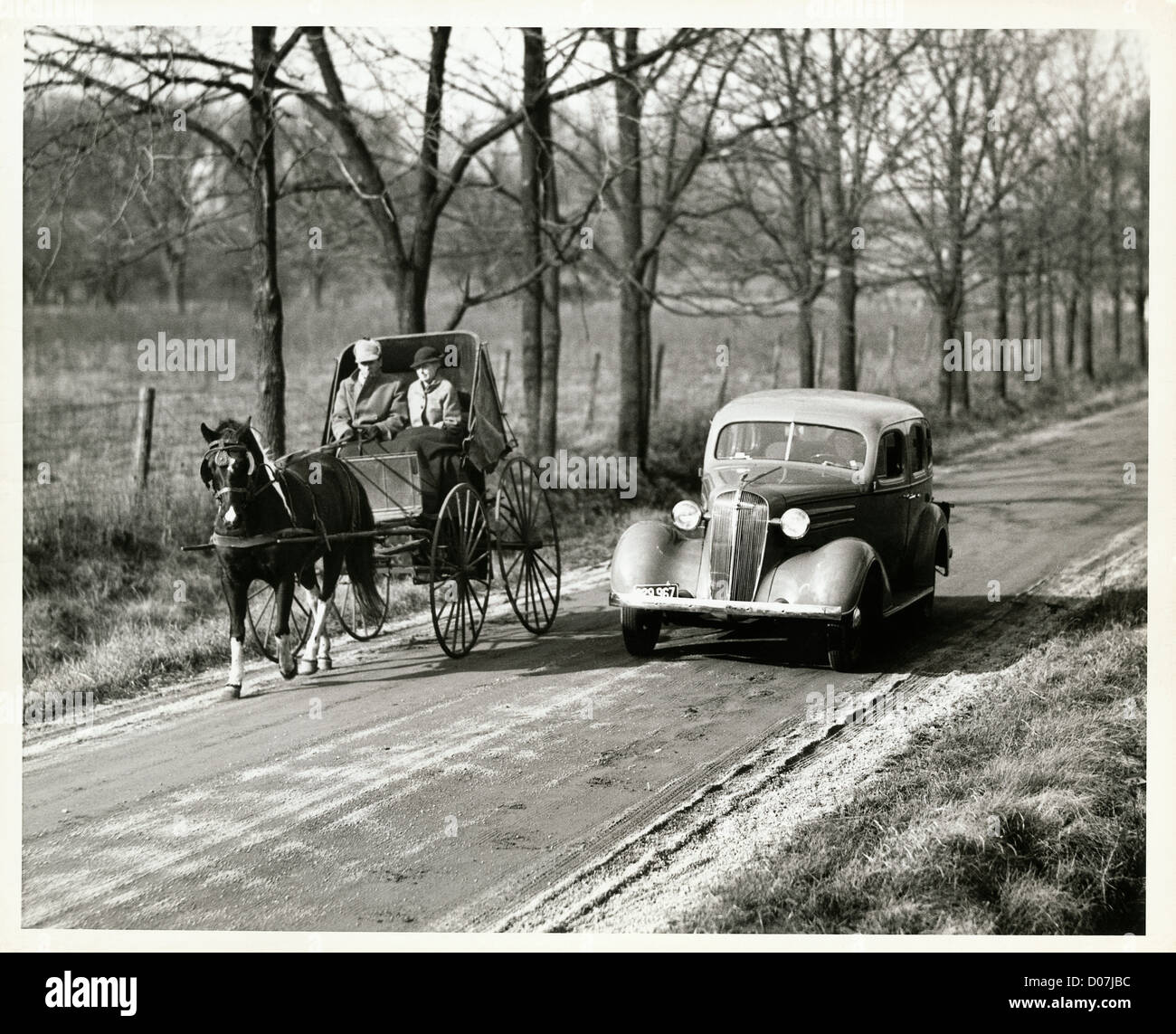
horses and cars lived together for a short time in start of XX century

Today I learned about a notable aspect of in-city cars as way of transportation that many overlook today, when discuss urban planning and how to deal with simple fact that more cars on roads simply means denser traffic jams across the city.

Here is a cite from a letter written by famous Dovlatov in 1982 about New York:

While looking at the museum exhibits, I learned some of the most unexpected things. It turned out that cars have done little to change the landscape of urban transportation. Its speed within city limits has practically remained the same. Before 1912, it was about 8–9 miles per hour. (On average, of course, and naturally, in the central part of New York City.) Today, we see the same figures. And during rush hour, the situation is even more absurd. A determined pedestrian can easily overtake a line of cars… The information regarding mail delivery surprised me quite a bit. One would think that the invention and development of the engine could have formally transformed this type of communication. A horse and a carβ€”there’s just no comparison! And yet, it didn’t happen. It’s enough to compare a few indicators. In 1901, a letter from New York to Chicago took three days. A basic horse delivered it in three days. Now, it takes a week. At best, five days. A letter from New York to France used to take six days. You just had to know the steamship schedule well and get the letter there right before departure. Nowadays, airmail from the States to Europe arrives on the ninth day.

It seems that returning to more natural ways transportation will not not slow anything dramatically contrary to what cars fans would scream.

Think that such information is related to what Low-Tech Magazine writes about.

Not sure whether it is possible to mention @lowtechmagazine properly from WordPress website.

Fediverse Reactions

Comments

3 responses to “Some writers letters full of gems”

  1. Jdb_env Avatar

    @magical_cat @lowtechmagazine
    Hi, thank you for sharing this article.

    – I never had the use of a car the time I lived in Paris.

    – mail slowed down : I see the sign of something else. In France, we had a very performant mail public service. A letter from anywhere in the country could be delivered within two days. Now, you're not sure of anything. They're even hiring illiterate people.
    – trains : they used to be in time by the minute. Today, many lines judged non-profitable were dismantled 1/2

    1
  2. Jdb_env Avatar

    @magical_cat @lowtechmagazine
    2/2 because they had not a ROI high enough. Replaced by high-speed trains too. The question is : how late will my train be ?

    What has changed there is the objective of the product. From public good to a profit high as possible.

    The result is a weak organization.

    I would say #enshitification

    1
    1. magical_cat Avatar

      Thanks for sharing all these details.
      It is quite strange situation we have across humanity.
      If something driven by state ownership and management, state bureaucrats don’t motivated to imprive things or even keep them good – they motivated to sit longer in their nomencalture positions and do as less as possible.
      If something is managed by for-profit org, it eat the thing they manage until it collapses, driven by maximization of profit per second, not for stable profit long-term and project longevity.
      If somehow it would be possible to transfer public resourses (via donations instead of state affiliated budget) to a NGO whose purpose would be to maintain (and optionally – improve) for quality of service and longevity of project. And I think it would be good to have multiple small local NGOs to choose from via these “elections via donations”) scoped to local communities.
      I think this would be much better than both of failed approaces which are kept tried over, over, and over.

Reposts

Likes

Leave a Reply

Your email address will not be published. Required fields are marked *

To respond on your own website, enter the URL of your response which should contain a link to this post’s permalink URL. Your response will then appear (possibly after moderation) on this page. Want to update or remove your response? Update or delete your post and re-enter your post’s URL again. (Find out more about Webmentions.)