Дни печали на России. Си принял Трампа лучше чем Путина!
Но есть и хорошие новости! Американская охрана хотела пройти внутрь Храма неба с оружием. Но китайцы сказали: — нет. 🤩На России сразу объяснили, что это был «страшный удар по престижу США». Кого интересует, что в Пекине решается судьба мира, когда можно срочно выпустить новость: «Трамп шел позади Си — за что Пекин унизил Вашингтон?»
Да это же прямо как советское гадание дидах на мавзолее!
Из книги “Осторожно: либерализм”, которую сейчас читаю:
И вот в одной старой немецкой книжке мне попалось следующее рассуждение, как раз в указанную тему. Автор описывает чувства некоего скитальца следующим образом: «Он покинул свою родину уже давно… Но и после всех прошедших лет она была ему не чужой. Он родился крепостным и жил рабом до того, как ушел в Бургундию. И хотя его страна и его народ причинили ему зла поболее, чем иные из его врагов, он до сих пор любил их. Может быть, потому что родина была единственным, что есть у раба». И меня эта мысль как молотком по голове огрела! Черт побери! Может быть, действительно, состояние, когда у человека нет ничего, кроме родины — и впрямь самое лучшее для воспитания патриотизма? И тогда российские элиты все делают правильно, подводя нас к тому состоянию, при котором у лишенного всего раба Родина — единственное духовное спасение, за которое он будет совершенно бескорыстно держаться руками и ногами?
Думаю, сейчас это уже не работает так. Теперь рабы будут руками и ногами держаться скорее за квартиру, машину, невыплаченный кредит за айфон, да хоть за пайку из говяжих анусов “красная цена”, но не за какую-то там родину.
А уж таких “отщепенцев”, кто держится за то чтобы родина была как можно дальше от их жизни, когда упомянутое рассуждение писалось, наверно и не было вовсе.
This article gives me some sad mood and feel. Probably because of being reminder, that anarchism is a fancy utopia, a colossus that based on two sand legs.
One such sand leg is an assumption that most people are good by default and their intentions are good or at least neutral. At least most of the time.
And another sand leg is an assumption that people can easily choose community to live in, and live among people sharing our worldview and values. In practice we can’t do so, and instead, we first being born in a random community, and then, at best, we can leave it, and choose between two or three random communities, we know nothing about beforehand. And as usually happens, we have choose by some different factors. Like, what country allows to settle a foreigner at easier legal terms, for example. A city or district where rent is cheaper. Or country or city where there is more reliable internet connectivity. Or even country or city where it is easier to find a job. Or something else. But you can’t say “Ok, Kagi, please find a community where an internet hikka couple with an anarchistic worldview can settle with ease, not being disturbed too much by neighbors or political catastrophes”.
BTW, this, the second sand leg, probably, is why internet, with all its limitations and unreliablilty, centralization from the start, and today anti-P2P nature, still lures people so much. The option to say “Hey, Kagi, please find like-minded people to listen to without too much need to talk myself.”
Instead of panic and screaming “AAAAAAAGRHHH!! EU will forbid VPNs!!! DIGITAL CIVIL LIBERTIES AND FREEDOMS ARE DYING! WE ARE GOING TO A DIGITAL GULAG!!!!!” I decided to explore some boring details. It seems to be something less stressful thing for me to do.
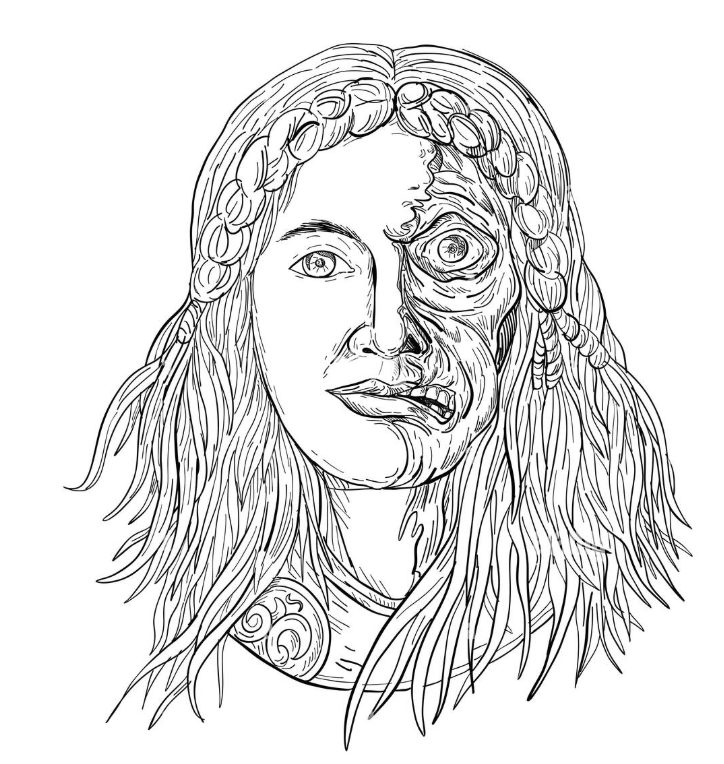
Drawing of hel goddess looks good as image of justice goddess who do not want be blindfolded anymore. Image from https://www.alamy.com/drawing-sketch-style-illustration-of-face-of-norse-goddess-hel-with-face-half-skeleton-and-half-flesh-with-gloomy-downcast-appearance-viewed-from-image358228525.html
I guess VPN would have to adapt, like “ok, we will update our products to bind age markers into traffic without exposing what kind of traffic goes through us”. I guess that some W3C work group or IETF already exists for all that.
This can be done via updating specs and demand some special headers with “signed age token” being passed through the network requests. With this you provide some bit of data (age verification document? Government ID?) at VPN product sign up or profile page, and get some token (age attestation token) you pass through to VPN connection server). These “age attestation tokens” can be different for each origin (protocol, host name, port). This can be reasonable thing, because, if I understand this correctly, VPN provider can see your traffic anyway.
VPN provider still can offload actual authentication to some third-party service, especially smaller and free VPNs. And this is another place where things can go ugly. Not sure whether some age verification providers will exist as NGOs as this would require a strong PCI compliance, likely. But non-commercial age verification system whose purpose would be to provide age verification and online identity service would be necessary in such legal landscape, as large commercial service would have motivation to sell advertising data based on such digital identity and binding it a behavior profile.
Then this age verification/attestation can be expanded to non-VPN connection at ISP level at some point, after people would use various tricks which invented for people surviving in dictatorships where VPNs are being suppressed or outlawed already, e. g. in Russia. Such as special packets fragmentation tactics, or wrappings into IMAP or HTTP requests, when encrypted part of traffic is represented as an image or PDF attachments or other tricky ways.
And most of the people would accept the need to go through digital identification, especially if it would be bound to integration of passkeys, like as way to grid of annoying passwords, when you use same identity (or few identities, created once at digital identity provider) instead filling same username, email, nickname, profile picture, and password boxes at sign up, making this a single-click activity. “Ease of use” peppered with some security improvement (or fancy promise of it) will sell very well to most of people.
Percentage of people who would be against all that would be same as people who do not use any Meta product, such as WhatsApp, Instagram, Facebook, Oculus headset, or what else they have now. And this is not some panic boo, this is description of reality where I live, when 95% of Georgia country people use Facebook and WhatsApp, and during travels, hotels and taxi travels by default assume we have WhatsApp. So this is sorta worldwide thing. That happens no matter what Meta does or does not.
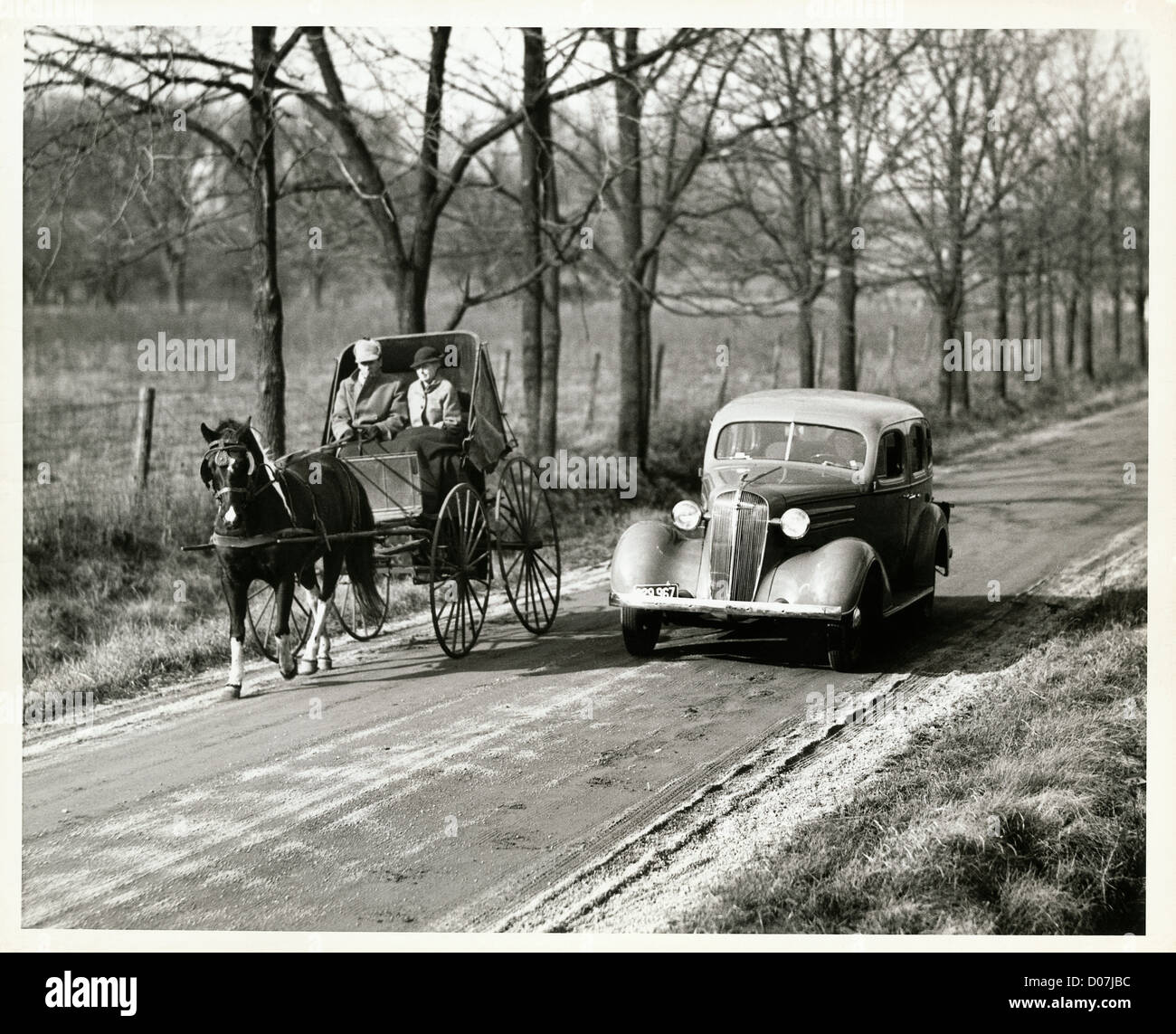
Today I learned about a notable aspect of in-city cars as way of transportation that many overlook today, when discuss urban planning and how to deal with simple fact that more cars on roads simply means denser traffic jams across the city.
Here is a cite from a letter written by famous Dovlatov in 1982 about New York:
While looking at the museum exhibits, I learned some of the most unexpected things. It turned out that cars have done little to change the landscape of urban transportation. Its speed within city limits has practically remained the same. Before 1912, it was about 8–9 miles per hour. (On average, of course, and naturally, in the central part of New York City.) Today, we see the same figures. And during rush hour, the situation is even more absurd. A determined pedestrian can easily overtake a line of cars… The information regarding mail delivery surprised me quite a bit. One would think that the invention and development of the engine could have formally transformed this type of communication. A horse and a car—there’s just no comparison! And yet, it didn’t happen. It’s enough to compare a few indicators. In 1901, a letter from New York to Chicago took three days. A basic horse delivered it in three days. Now, it takes a week. At best, five days. A letter from New York to France used to take six days. You just had to know the steamship schedule well and get the letter there right before departure. Nowadays, airmail from the States to Europe arrives on the ninth day.
It seems that returning to more natural ways transportation will not not slow anything dramatically contrary to what cars fans would scream.
Think that such information is related to what Low-Tech Magazine writes about.
Not sure whether it is possible to mention @lowtechmagazine properly from WordPress website.
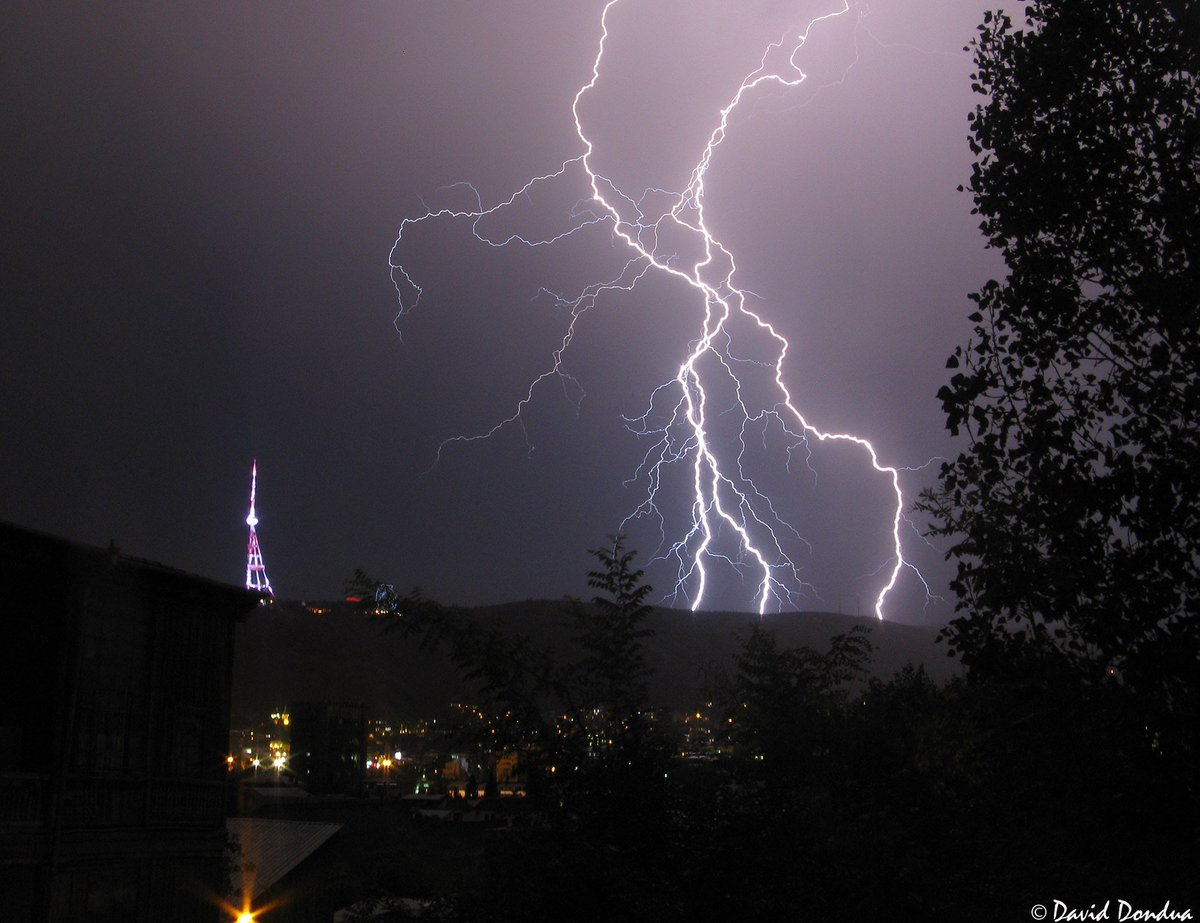
It was a thing that is hard to miss. Today I discussed with my wife some recent politics and events, and as soon as I said something like “It is time to destroy russia”, lighting strike and thunder boom happened instantly, and first thought was “Perun agrees with this!”.
Of course you can say this is some coincidence. But how high is probability of randomly matching in time when you saying something and transition of usual rain into thunderstorm?
@magical_cat Good for you for reaching out. You had a good reason: you live in a community and may need to cooperate. You came to the sickening realization that this person’s mind has been infected with toxic disinformation. In your place, I wouldn’t necessarily pursue a neighborly relationship, but I’d stay alert to opportunities for a different relationship. Maybe there are places where your interests overlap. Maybe you hear complaining about WiFi and you realize you can help and so offer. I think compassion can be a great guide. People who suffer from the consequences of a “disinformation lobotomy” are in a sort of prison. Two books I recommend are Anthony de Mello’s Awareness and Timothy Snyder’s On Freedom. Keep up your exploration. It takes courage, which you obviously have.
Thanks for reminding about compassion. Real problem for me was that this “disinfo shower” felt on me in response to literally to “hello, I am your neighbor.” type of smalltalk.
I am not very experienced in “martial art of smalltalk”, like how to properly dodge of disinfo hits or “misidentity kicks”.
Example of the latter below. Many people think by default that if someone starts talking in russian, they seems to speak how they admire putin as a strong leader and how good to have “othodox brothers” russians as neighbors, so on. Misidentification of “everyone who starts chat in russian likely to love putin”. type.
Not all people speak this way, but I noticed that people infected with kremlin disinfo about different topics are tend to mention this. And they seems to seek validation of their beliefs, agreement with them or something like that.
I don’t know how it is done to dodge divisive topics like disinfo, how to turn talk to topics I want to talk about. About house repairs or rumors that our house can be demolished by mayor office order. I guess there are some books like “сто лучших боевых приёмов смолтолка” (Kagi Translate was able to identify and describe wordplay here!) or “The top one hundred small talk power moves” but I never knew about their existence.
I remember I seen an article, it was about USA context but it applicable here in Georgia country too. Imagine if GOP took full power (Senate and Rep majority, stuffed election commissions and electoral college courts and sheriffs with MAGA loyalists), and Dems are in defense position or even “survival mode”, regardless of how many of them actually are. So, that article described interesting thing. Such people like my neighbor by default live in “identity defense mode”. And if person they talking with somehow prove they are not threat to their identity group (e. g. does not demand to force abortions on white people, contary to possible disinfo about Dems), such people are relax, and go to “common person mode”, exiting from “identity protection mode”. After that it is possible they can be contacted with. But I don’t have such “we have a common ground” skill. Even I spotted one common ground spot – he said that if it will be known that our house really planned for demolition, he will not allow this to happen anyway, like “I bought this apartment, this is mine, so I will not allow that”.
Tried to establish contact with an older neighbor. Done this first time in few years.
Instantly had shit shower full of kremlin disinformation shit with “gems” (or mind germs?) including “Ukrainian regime grabbed the saints remains from Kiev Pechorsky Lavra!!! Remains of saints!!!”, “Russia are orthodox brothers so they did not bomb Tbilisi and stepped back in 2008!” “Do you know about Epstein files!? Pedophile [a humiliating word about Jews] ate children!!!!”.
Disgusting. It gives me strong need to buy bunker somewhere in deep of Australia, or in the middle of Amazon jungles – the farther the better.
I guess this is typical thing here – people experiencing consequences of “disinformation lobotomy” via hours of watching TV swamp like Imedi, Objektiv, or drinking sewers right from the source – russian TV channels like “soloviev live”, “1st channel”, russia today, and alike.
Yes, there are some other sources of Kremlin disinfo, for example people wearing robes and speaking in name of God, injecting disinfo into their sermons, which specific problem of local context but I thought first about TV propaganda stamps when he said all that.
But my question is this: is there any sense to interact with these people? Or imagine like they are annoying distraction, a Matrix glitch, and don’t interact with these people at all, including in questions normally requiring cooperation with neighbors, like the repairs of apartment building?
I tried this because I decided to explore who I live with, for sake of possibility of future mutual aid, skills exchange, and all that anarchic vibes and all that jazz. But I doubt now that people like this are alive. They are worse than sleeping. They are “turned off” people.
Woe on me, who dared to walk outside of my self-isolation shell…
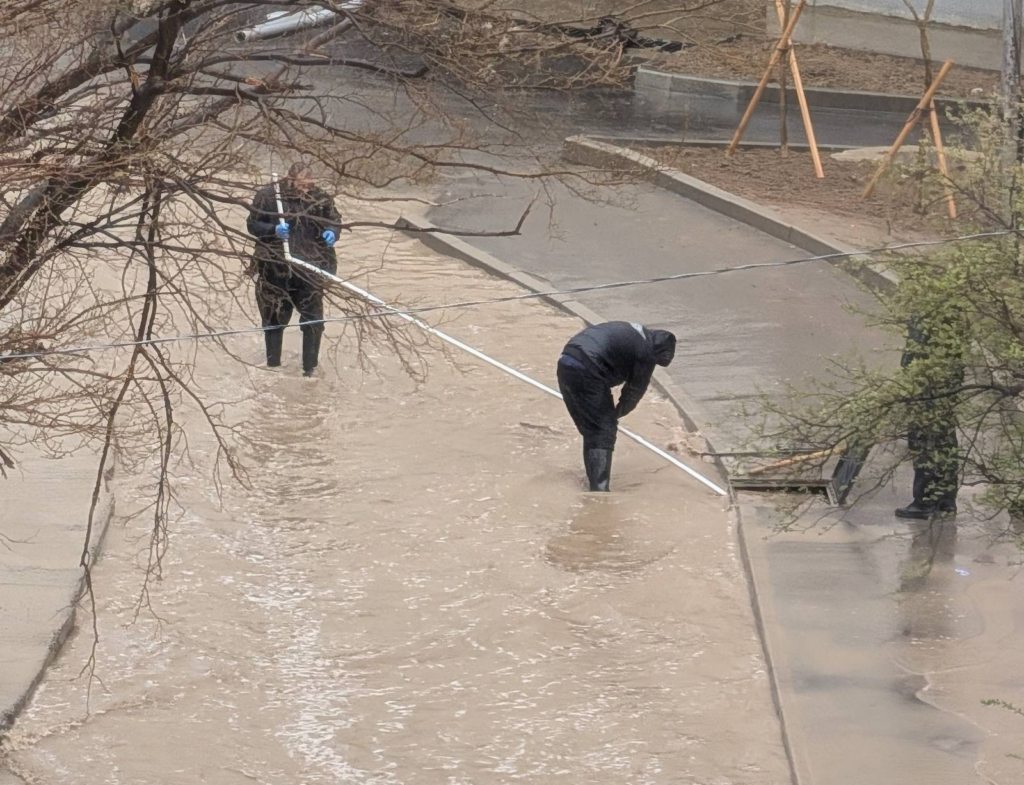
Sometimes we fill extra meaning anything, even appearing or disappearing of a large puddle on the street. The puddle I talking about is something I never seen in person, but I follow its fate reading the Dispatch column by at civil.ge
All of three parts of this long story are worth reading.
I can say I feared lighting strikes and thunder in the past.
But when my worldview become closer to animism and polytheism it all changed. My first thought on first thunderstorm of 2026 was “Perun came back!”. Yes, in this joyful manner.
I understand that people in old times feared thunderstorms. And Perun likely had some grim reputation, which produced sincretism of Perun into orthodox Ilija the Prophet.
But for me the first thunderstorm of the year means different thing. Summer will come, it almost at doorsteps.
My life is much more joyful now than when I was a grumpy atheist.